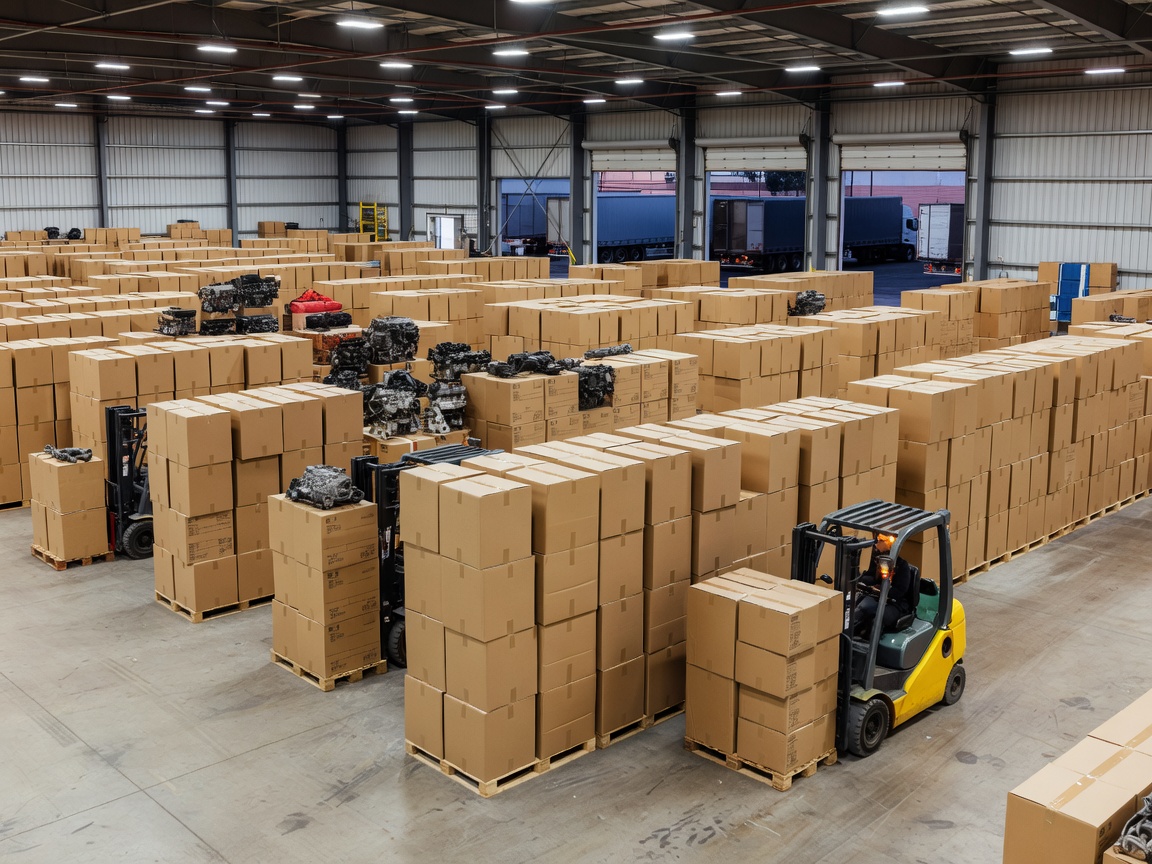
Operational overview
Picking begins with a usable order reference and a stock location that can be reached without ambiguity. The operator confirms the part, quantity and package condition before moving the unit to the preparation area. Similar-looking components require deliberate label checks, not visual guesswork.
Distribution support covers the warehouse side of the movement. It includes order assembly, protective packaging, documentation checks and staging by shipment or route instruction. It does not imply a delivery guarantee or control over an external carrier.
Process sequence
- Release. Confirm the order reference, required units and handling notes.
- Pick. Navigate to the recorded location and select the identified part.
- Verify. Compare reference, quantity and visible condition.
- Prepare. Use suitable packaging and keep labels readable.
- Stage. Separate completed orders and check accompanying documents.
Practical examples
A multi-line order may combine small electrical items with larger mechanical components. These lines should be protected and consolidated without hiding individual labels. A body component may need a larger, stable position. A small accessory may need containment so that it does not move inside a larger carton.
Picking errors often start before the operator reaches the shelf. Ambiguous order lines, stale locations, duplicate references and unclear package units create avoidable decisions. The correct response is to stop and resolve the uncertainty. Substituting a similar-looking item without authorization is not a control.
Advantages and limits
A defined pick sequence reduces searching and gives the preparation team a clear handover. Visible staging also supports a final comparison before the shipment leaves the warehouse process.
Picking accuracy depends on the quality of the order and inventory records. Packaging preparation cannot correct an incorrect part identity. Distribution timing, customs treatment and final transport remain outside this warehouse control page unless separately agreed.
What to check
- Is the order line specific enough to pick?
- Does the physical label match the order reference?
- Is the picked quantity correct?
- Are fragile or sensitive packages protected?
- Is the completed order separated from unresolved exceptions?