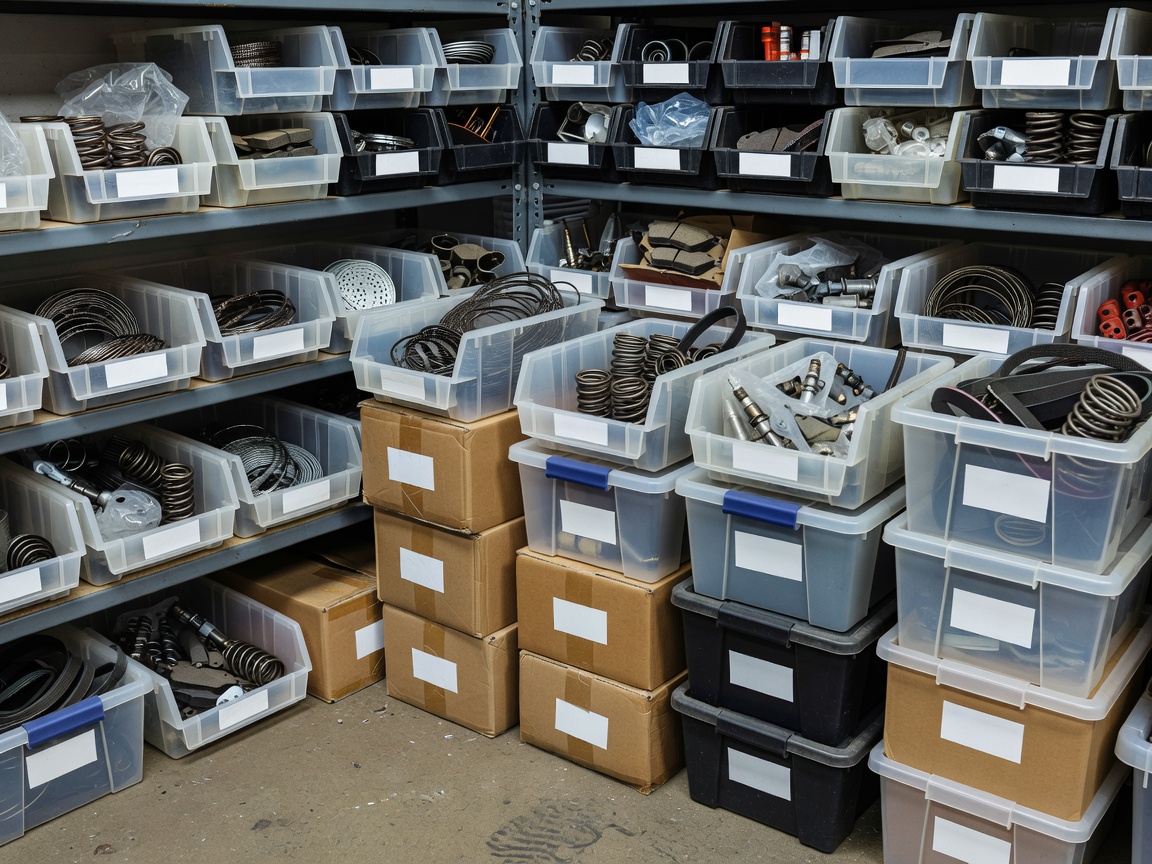
Operational overview
Component storage starts with classification. The purpose is not to create unnecessary complexity. It is to prevent parts with different physical characteristics from being treated as interchangeable stock. A clear category, package type and handling note are enough to guide the first storage decision.
Body components may need stable, protected positions with adequate clearance. Mechanical components may be heavier or irregularly shaped. Electrical components may arrive in smaller protective packages with labels that must remain legible. Accessories can be varied and easy to mix. Sensitive items require the storage conditions stated by their supplier or owner.
Process sequence
- Classify. Record family, package type and visible handling requirement.
- Zone. Choose a shelf, bin, pallet or protected position.
- Label. Face the part reference and quantity toward the aisle.
- Separate. Prevent similar references from sharing an unclear container.
- Review. Recheck storage after repacking, opening or movement.
Practical considerations
Storage should preserve the information needed by the next operator. Do not cover a reference with a handling label. Do not place a loose small item inside a larger carton without recording the change. When a package is opened, its remaining quantity and condition should be visible.
Handling notes must remain practical. They may concern orientation, protection, weight distribution or packaging condition. They should not be replaced by assumptions about a component’s technical use. Warehouse staff should follow supplied instructions and escalate uncertainty.
Advantages and limits
Component zoning reduces mix-ups and makes storage decisions repeatable. It also supports cleaner picking routes and more focused checks for packaging condition.
Zoning is not a substitute for technical inspection or product approval. It does not establish compatibility, fitment or performance. Those questions belong to the responsible technical or commercial process.
What to check
- Is the component family clear?
- Does the package protect the item during normal storage?
- Can the label be read without moving the part?
- Are sensitive or uncertain items identified?
- Is the storage position suitable for the item’s size and weight?